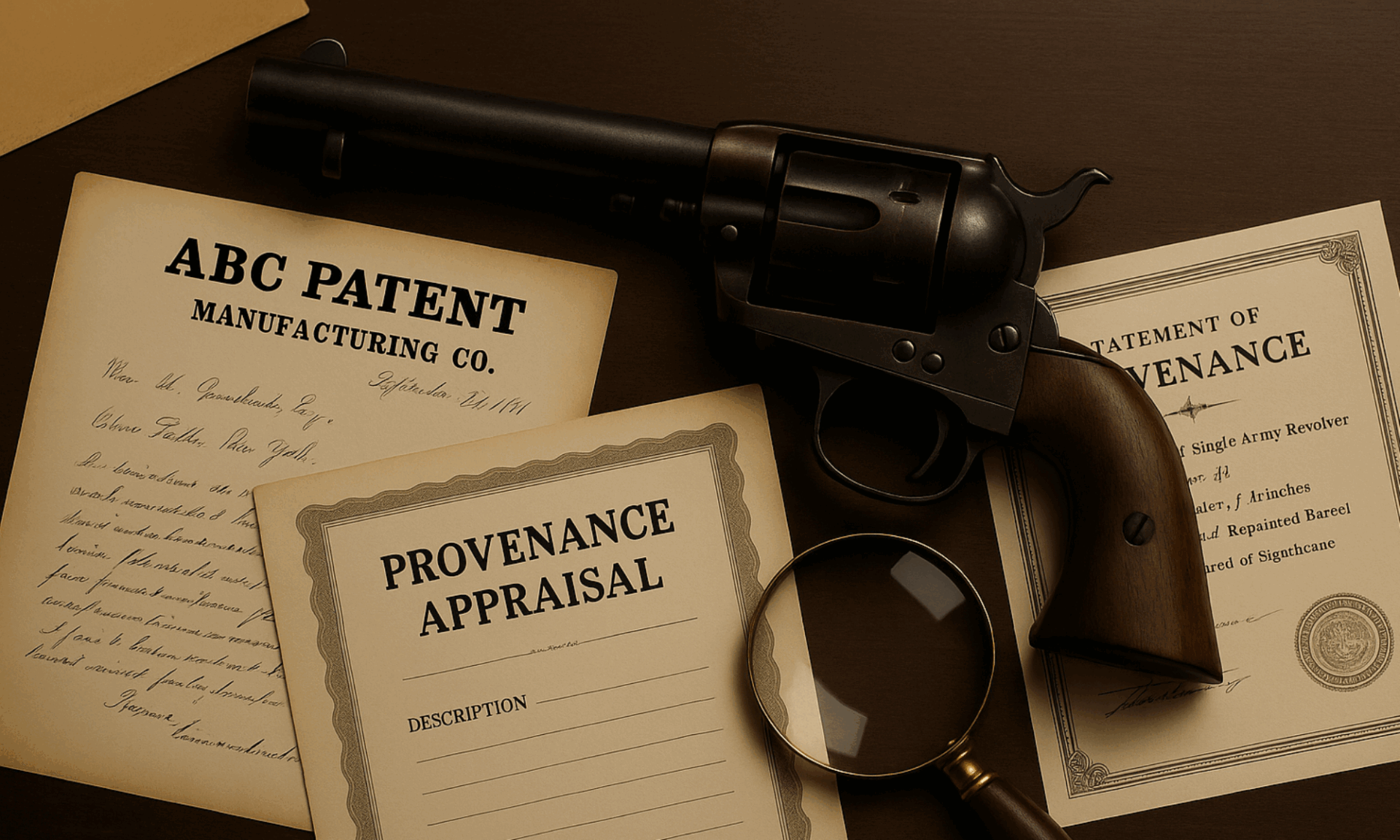
Firearms appraisals are used for far more than buying and selling decisions. They are relied upon in estate settlements, probate, divorce proceedings, insurance claims, charitable donations, litigation, and tax matters. In these contexts, an appraisal is not merely an opinion—it is often scrutinized as evidence.
A legally defensible firearms appraisal must withstand review by attorneys, courts, insurers, auditors, and opposing experts. That requires far more than experience or general market knowledge. It demands a documented, methodical, and transparent process grounded in recognized standards and verifiable data.
This article outlines the key elements that determine whether a firearms appraisal is legally defensible—or vulnerable to challenge.
1. Clear Identification and Verification of the Firearm
A defensible appraisal begins with accurate and complete identification of the firearm.
This includes:
- Manufacturer
- Model and variation
- Serial number and prefix/suffix significance
- Caliber or gauge
- Configuration (barrel length, finish, sights, stocks, grips)
- Production era or date of manufacture
- Any factory or aftermarket modifications
Errors at this stage undermine the entire appraisal. Courts and insurers frequently reject valuations where the firearm was misidentified, incorrectly dated, or confused with a different production variant.
Where possible, identification should be supported by:
- Factory records or letters
- Manufacturer references
- Collector guides
- Photographic documentation
2. Condition Grading Using a Recognized Standard
Condition is the single largest driver of firearms value—and the most common source of dispute.
A legally defensible appraisal must use a recognized, repeatable grading standard, not vague descriptors like “good” or “excellent.”
Commonly accepted systems include:
- NRA Modern Firearms Condition Standards
- NRA Antique Firearms Standards
- Photo Percentage Grading Systems (PPGS)
The appraisal should:
- State which grading system is used
- Explain how the grade was determined
- Note wear, finish loss, mechanical condition, and originality
- Identify replaced, refinished, or repaired components
This allows another qualified appraiser to replicate or challenge the conclusion based on facts, not opinion.
3. Proper Market Definition (Purpose Matters)
A legally sound appraisal must clearly define which market is being analyzed.
Value can vary dramatically depending on purpose, such as:
- Fair Market Value (estate, probate, donation)
- Replacement Value (insurance)
- Liquidation Value (forced sale)
- Retail vs. wholesale market context
A defensible appraisal explicitly states:
- The intended use of the appraisal
- The definition of value being applied
- The market level analyzed (auction, dealer retail, private sale)
Failure to define the market context is a frequent reason appraisals are challenged or dismissed.
4. Verifiable Comparable Sales Data
Opinions are not evidence. Data is evidence.
A legally defensible firearms appraisal relies on:
- Recent, relevant comparable sales
- Publicly verifiable sources (auction results, dealer sales, published records)
- Comparable firearms with similar condition, configuration, and originality
Each comparable should include:
- Sale venue
- Sale date
- Hammer price or realized price
- Notes on condition and differences
The appraiser must also explain adjustments made for condition, rarity, provenance, or market trends. Simply listing high prices without analysis weakens credibility.
5. Consideration of Originality, Provenance, and Rarity
Originality and provenance can significantly affect value—but only when properly documented.
A defensible appraisal:
- Distinguishes factory original features from later modifications
- Separates documented provenance from anecdotal claims
- Explains how rarity impacts demand, not just production numbers
Unsupported claims such as “rare,” “historically important,” or “one of a kind” are routinely challenged unless supported by documentation.
6. Photographic Documentation
Professional appraisals include clear photographic evidence to support identification and condition conclusions.
This typically includes:
- Full left and right profiles
- Serial number
- Markings and proofs
- Areas of wear or damage
- Accessories or original packaging
Photographs protect both the appraiser and the client by creating a permanent visual record tied to the valuation date.
7. Professional Qualifications and Scope Disclosure
Courts and insurers evaluate who performed the appraisal as closely as what the appraisal says.
A defensible appraisal includes:
- Appraiser credentials and experience
- Relevant certifications or training
- Firearms-specific expertise (not general personal property)
- Disclosure of limitations and assumptions
Equally important is stating what the appraisal does not cover, such as hidden mechanical defects or undocumented provenance.
8. Written Narrative and Methodology
A legally defensible firearms appraisal is not a number—it is a written explanation.
The report should include:
- Purpose and intended use
- Identification summary
- Condition analysis
- Market analysis
- Comparable sales discussion
- Final value conclusion
- Certification and signature
This narrative demonstrates that the value was reached through a reasoned, professional process, not speculation.
9. Independence and Ethical Standards
Finally, defensibility requires independence.
An appraisal is vulnerable if the appraiser:
- Has a financial interest in the firearm
- Is acting as a buyer or seller
- Is advocating for a desired outcome
Ethical separation between valuation and transaction is critical in legal and insurance contexts.
Why Legally Defensible Appraisals Matter
An unsupported firearms valuation can result in:
- Estate disputes
- IRS challenges
- Insurance claim denials
- Court-ordered reappraisals
- Personal liability for fiduciaries
A properly prepared firearms appraisal protects:
- Executors and trustees
- Attorneys and CPAs
- Collectors and heirs
- Insurers and institutions
Final Thoughts
A legally defensible firearms appraisal is not about inflating value or finding the highest price. It is about accuracy, documentation, and professional discipline.
Whether for estate planning, litigation, insurance, or private ownership, the appraisal must stand on its own—without explanation, advocacy, or assumption.
That standard is what separates a casual opinion from a professional firearms appraisal.
Have questions about your firearms contact us for a free consultation!